Governance – Commitments/”Informed Consent” :: Antony J. Blinken, U.S. Secretary of State

Governance – Commitments/”Informed Consent”

Secretary Antony J. Blinken at a Press Availability
Antony J. Blinken, U.S. Secretary of State
Remarks to the Press
Washington, DC January 27, 2021
[Excerpt]
QUESTION: …You’ve talked a lot about restoring U.S. leadership in the world, but allies note that everything that you do could again be overturned in four years, and that this is a cycle that doesn’t instill confidence in the long term in the United States credibility. So how can any one administration, if it can be done, assure the world that the United States can be trusted to keep its commitments?

SECRETARY BLINKEN: So one of the things I’ve done over the last 24 hours is I’ve spent a lot of time on the phone already with our – some of our closest allies and partners in various parts of the world, and that’s continuing. And I can – what I’ve picked up from those conversations already is a very, very strong desire for the United States to be back in the room, back at the table, working with them on the many, many common challenges we face, and that was almost palpable in the conversations I’ve had to date. And I expect to hear more of that in the days ahead.

One of the things, though, to your point, is that when it comes to virtually everything we’re doing – and the President has said this many times – when it comes to foreign policy, it is hard to have a sustainable foreign policy absent the informed consent of the American people. And that informed consent, I think, comes in a couple of ways. One is in a sense it comes from you, because many Americans are reading about, hearing about, listening to what we’re doing thanks to you. And that’s vitally important to make sure that they are fully informed and thinking about and ultimately providing their consent to what we’re doing.

But the place that, in our system, that informed consent is vitally important is with Congress. The members of Congress are the representatives of the American people. They provide advice and consent to our policies. And I think one of the things you’re going to see from our administration is working as closely as we possibly can with Congress on these issues from the takeoff, not just on the landing. Because ultimately, for these policies to be sustainable, we, I think, need to try to work them as much as we can up front, not at the back end.

There are going to be disagreements. There are going to be places where we’re just in a different place. But I think we stand a better chance in producing the kind of policies that will stand the test of time if we’re working closely up front with Congress. And we’ll see where we get, but I’m determined that we do that.

2020 Corruption Perceptions Index reveals widespread corruption is weakening COVID-19 response, threatening global recovery

Governance/Corruption

2020 Corruption Perceptions Index reveals widespread corruption is weakening COVID-19 response, threatening global recovery
Corruption and COVID-19 worsening democratic backsliding
28 January 2021 Read the report

The 2020 Corruption Perceptions Index (CPI) released today by Transparency International reveals that persistent corruption is undermining health care systems and contributing to democratic backsliding amid the COVID-19 pandemic. Countries that perform well on the index invest more in health care, are better able to provide universal health coverage and are less likely to violate democratic norms and institutions or the rule of law.

“COVID-19 is not just a health and economic crisis. It is a corruption crisis. And one that we are currently failing to manage,” Delia Ferreira Rubio, Chair of Transparency International said. “The past year has tested governments like no other in memory, and those with higher levels of corruption have been less able to meet the challenge. But even those at the top of the CPI must urgently address their role in perpetuating corruption at home and abroad.”

Global highlights
The 2020 edition of the CPI ranks 180 countries and territories by their perceived levels of public sector corruption, drawing on 13 expert assessments and surveys of business executives. It uses a scale of zero (highly corrupt) to 100 (very clean).
:: Denmark and New Zealand top the index, with 88 points. Syria, Somalia and South Sudan come last, with 14, 12 and 12 points, respectively.

Significant changes
Since 2012, the earliest point of comparison in the current CPI methodology, 26 countries significantly improved their CPI scores, including Ecuador (39), Greece (50), Guyana (41), Myanmar (28) and South Korea (61).

Twenty-two countries significantly decreased their scores, including Bosnia & Herzegovina (35), Guatemala (25), Lebanon (25), Malawi (30), Malta (53) and Poland (56).

Nearly half of countries have been stagnant on the index for almost a decade, indicating stalled government efforts to tackle the root causes of corruption. More than two-thirds score below 50.

COVID-19
Corruption poses a critical threat to citizens’ lives and livelihoods, especially when combined with a public health emergency. Clean public sectors correlate with greater investment in health care. Uruguay, for example, has the highest CPI score in Latin America (71), invests heavily in health care and has a robust epidemiological surveillance system, which has aided its response to COVID-19 and other infectious diseases, like yellow fever and Zika.

In contrast, Bangladesh scores just 26 and invests little in health care while corruption flourishes during COVID-19, ranging from bribery in health clinics to misappropriated aid. Corruption is also pervasive in the procurement of medical supplies. Countries with higher corruption levels also tend to be the worst violators of rule of law and democratic institutions during the COVID-19 crisis. These include Philippines (34), where the response to COVID-19 has been characterised by major attacks on human rights and media freedom.

Continuing a downward trend, the United States achieves its worst score since 2012, with 67 points. In addition to alleged conflicts of interest and abuse of office at the highest level, in 2020 weak oversight of the US$1 trillion COVID-19 relief package raised serious concerns and marked a retreat from longstanding democratic norms promoting accountable government.

Recommendations
The past year highlighted integrity challenges among even the highest-scoring countries, proving that no country is free of corruption. To reduce corruption and better respond to future crises, Transparency International recommends that all governments:
:: Strengthen oversight institutions to ensure resources reach those most in need. Anti-corruption authorities and oversight institutions must have sufficient funds, resources and independence to perform their duties.
:: Ensure open and transparent contracting to combat wrongdoing, identify conflicts of interest and ensure fair pricing.
:: Defend democracy and promote civic space to create the enabling conditions to hold governments accountable.
:: Publish relevant data and guarantee access to information to ensure the public receives easy, accessible, timely and meaningful information.

Stepping up education in emergencies through enhanced cooperation

Education in Emergencies

Stepping up education in emergencies through enhanced cooperation
Press Release – Swiss Federal Department of Foreign Affairs
Bern, 25.01.2021 – The Geneva Global Hub for Education in Emergencies was officially launched on 25 January 2021. During the 2019 Global Refugee Forum held in Geneva, Switzerland pledged to position International Geneva as a global centre for education in emergencies. Over 127 million children in humanitarian crises and conflict regions cannot go to school. More than 40% of the 80 million displaced people are children; the majority of these children have no access to education, resulting in a lack of prospects, increased violence against children and lost generations. The Hub, the development of which Switzerland has played a major role in, aims to change this.

Humanitarian emergencies are on the rise owing to climate change and its consequences; conflicts; and not least COVID-19. Even prior to the coronavirus outbreak, some 258 million school-aged children and young people worldwide were unable to attend school. The situation is worsening because of COVID-19: the UN estimates that a further 24 million children will not find their way back into schooling due to school closures and precarious economic situations. Progress achieved in recent years in the area of education is being rolled back. Last year, UN Secretary-General António Guterres urged the international community not to neglect education, because otherwise a “generational catastrophe” with lasting social and economic ramifications would ensue. Conflicts, irregular migration and displacement are also increasing. On average, refugee situations last 17 years – an entire childhood.

Globally, 48% of refugee children do not attend school. Approximately 127 million of those children without school access live in countries affected by emergency situations. In addition to creating prospects, access to education offers hope and protection to children, who are the most vulnerable in crises. Nevertheless, education is one of the sectors that receives the least recognition and funding in humanitarian disasters.

Launch of the Geneva Global Hub for Education in Emergencies
Based on its humanitarian tradition and with a particular emphasis on protection and education, Switzerland pledged to establish Geneva as a global hub for education in emergencies on the occasion of the 2019 Global Refugee Forum in Geneva. With regard to education in emergencies, International Geneva has the hitherto untapped potential of a platform that promotes cross-sectoral cooperation with a view to creating educational opportunities on the ground for young people affected by crises and displacement. As a result, the Geneva Global Hub for Education in Emergencies was officially launched on 25 January 2021.

International Geneva – host to the United Nations Office at Geneva, 38 international organisations, the permanent representations of 177 UN member states, 750 NGOs, and leading academic institutions – offers added value for education in emergency situations. The Geneva Global Hub for Education in Emergencies (a virtual and physical platform) brings together actors who are directly involved in the education sector as well as organisations active in areas such as protection, healthcare, peacebuilding and human rights. This winning combination of thematic expertise has the power to contribute towards significantly improving the educational situation of young people affected by crises, conflicts and displacement.

The Hub pursues the following objectives:
1. Facilitating inclusive education for children and young people in emergencies by strengthening the cooperation of International Geneva actors.
2. Raising awareness among governments and partner organisations to ensure that education is considered one of the highest priorities before, during and after emergencies and protracted crises.
3. Improving the effectiveness of operational measures in the area of education in emergencies through better data, innovative research and solutions that provide access to quality education while developing resilient education systems.

Education is a priority of Switzerland’s international cooperation
Switzerland’s International Cooperation Strategy 2021–24, which is derived from the foreign policy strategy, accords great importance to education. Conflicts, natural disasters, displacement and irregular migration are set to rise in the coming years. Protecting the most vulnerable population groups in crisis and displacement contexts and safeguarding the provision of quality basic services – in particular education and healthcare – is one of the four main objectives of the current international cooperation strategy. It is in Switzerland’s interests to reduce the causes of displacement and irregular migration and to guarantee quality basic services on the ground.

The Geneva Global Hub for Education in Emergencies, whose activities cut across thematic areas, offers the opportunity to bring about change with regard to the protection and education of children affected by crises and displacement.

Economic Inclusion Programs Now Benefit 92 Million People Worldwide

Development

Economic Inclusion Programs Now Benefit 92 Million People Worldwide
Unprecedented surge in these programs seen in 2020, World Bank report says
WASHINGTON, Jan. 26, 2021 — Economic inclusion programs, which help boost income and assets of the world’s poorest, are on the rise in 75 countries, reaching approximately 20 million poor and vulnerable households, and benefitting nearly 92 million individuals. This surge comes at a crucial time, as more than 700 million people around the world face extreme poverty, a number on the rise for the first time in two decades.

According to the World Bank’s newly published “State of Economic Inclusion (SEI) Report 2020: The Potential to Scale,” economic inclusion programs —usually a combination of cash or in-kind transfers, skills training or coaching, access to finance, and links to market support— are fast becoming a critical instrument in many governments’ large-scale anti-poverty strategies. And they are likely to continue, especially in areas affected by conflict, climate change, and shocks, due to the COVID-19 pandemic.

“One of the most stubborn challenges we face in development is positively transforming the lives of the extreme poor and vulnerable— a problem exacerbated by the COVID-19 pandemic,” said Mari Pangestu, World Bank Group Managing Director. “This report presents—for the first time—a systematic review of economic inclusion programs around the world, and sheds light on how governments can best invest in social protection, jobs, and financial inclusion, to help the poor build a better future for themselves.”

The SEI Report is a result of a unique collaboration under the Partnership for Economic Inclusion (PEI). PEI is a dedicated platform to support the adoption and adaptation of national economic inclusion programs working with a variety of stakeholders, including national governments and bilateral, multilateral, non-governmental, research, and private sector organizations…

The report examines over 200 programs, across 75 countries. It finds that governments around the world are increasingly scaling up economic inclusion initiatives through social safety nets. In-depth case studies covering the Sahel, Bangladesh, Peru and India highlight the evolution of economic inclusion programs, and how they are addressing challenges such as urbanization, gaps in human capital accumulation, adaptations to shock, and technological change.

The implications of COVID-19 feature broadly in the report, which looks at the fallout of the pandemic at the household as well as institutional level…

Coronavirus [COVID-19] – WHO Weekly Epidemiological and Operational updates

Emergencies

Coronavirus [COVID-19] – WHO
Public Health Emergency of International Concern (PHEIC)
https://www.who.int/emergencies/diseases/novel-coronavirus-2019

Weekly Epidemiological and Operational updates
Last update: 30 January 2021
Confirmed cases :: 101 561 219 [week ago: 96 877 399] [two weeks ago: 92 506 811
Confirmed deaths :: 2 196 944 [week ago: 2 098 879] [two weeks ago: 2 001 773]
Countries, areas or territories with cases :: 223

White House – U.S.: Memorandum on Restoring Trust in Government Through Scientific Integrity and Evidence-Based Policymaking

White House [U.S.]

Memorandum on Restoring Trust in Government Through Scientific Integrity and Evidence-Based Policymaking
January 27, 2021 • Presidential Actions
It is the policy of my Administration to make evidence-based decisions guided by the best available science and data.  Scientific and technological information, data, and evidence are central to the development and iterative improvement of sound policies, and to the delivery of equitable programs, across every area of government.  Scientific findings should never be distorted or influenced by political considerations.  When scientific or technological information is considered in policy decisions, it should be subjected to well-established scientific processes, including peer review where feasible and appropriate, with appropriate protections for privacy.  Improper political interference in the work of Federal scientists or other scientists who support the work of the Federal Government and in the communication of scientific facts undermines the welfare of the Nation, contributes to systemic inequities and injustices, and violates the trust that the public places in government to best serve its collective interests…

Remarks by President Biden on the Fight to Contain the COVID-19 Pandemic
January 26, 2021 • Speeches and Remarks

Fact Sheet: President Biden Announces New Steps to Boost Vaccine Supply and Increase Transparency for States, Tribes, and Territories
January 26, 2021 • Statements and Releases
….The President is taking the following actions today:
:: An Increase in Weekly Vaccine Supply to States, Tribes and Territories: The Biden-Harris Administration will increase overall, weekly vaccine supply to states, Tribes and territories from 8.6 million doses to a minimum of 10 million doses. This increase of 1.4 million doses per week will allow millions more Americans to get vaccinated sooner than previously anticipated. The Administration is committing to maintaining this as the minimum supply level for the next three weeks.
:: Increased transparency for States, Tribes, and Territories to Help Their Vaccination Efforts: The Biden-Harris Administration is taking action to provide states, Tribes and territories with a reliable three-week supply look-ahead. The Department of Health and Human Services will provide allocation estimates for the upcoming three weeks as opposed to the one week look-ahead that they previously received. This increased transparency will give state and local leaders greater certainty around supply so that they can plan their vaccination efforts and administer vaccines effectively and efficiently.
:: Purchase 200 Million Additional Doses to Be Delivered This Summer, Double the Nation’s Vaccine Supply: President Biden directed his COVID-19 Response Coordinator to work with HHS to increase our total vaccine supply for the American people.  The Biden-Harris Administration is working to purchase an additional 100 million doses of each of the two Food and Drug Administration-authorized vaccines – Pfizer and Moderna.  This increases the total vaccine order for the U.S. by 50%, from 400 million to 600 million with these additional doses expected to deliver this summer. With these additional doses, the U.S. will have enough vaccine to fully vaccinate 300 million Americans by the end of this summer.

POLIO Public Health Emergency of International Concern (PHEIC); WHO/OCHA Emergencies

Emergencies

POLIO
Public Health Emergency of International Concern (PHEIC)

Polio this week as of 27 January 2021
:: Meeting virtually at this week’s WHO Executive Board (EB), global health leaders and ministers of health urged for concerted and emergency efforts to finally rid the world of polio, noting a global and collective responsibility to finish the disease once and for all. Delegates also reiterated their support for the sustainable transitioning of polio assets, recognizing that successful polio transition and polio eradication are twin goals. Read more

Summary of new WPV and cVDPV viruses this week (AFP cases and ES positives):
:: Pakistan: 9 WPV1 positive environmental samples and six cVDPV2 cases
:: Afghanistan: 18 cVDPV2 positive environmental samples
:: Burkina Faso: three cVDPV2 cases
:: Mali: seven cVDPV2 cases
:: Yemen: one cVDPV1 case

::::::
::::::

Editor’s Note:
Continuing with this edition, we include information about the last apparent update evident on the WHO emergency country webpages, recognizing almost universal and significant interims since last update regardless of the level of the emergency listed.

WHO Grade 3 Emergencies [to 30 Jan 2021]

Democratic Republic of the Congo – No new digest announcements [Last apparent update: 12 Jan 2021]
Mozambique floods – No new digest announcements identified [Last apparent update: 3 November 2020]
Nigeria – No new digest announcements identified [Last apparent update: 29 Jun 2020]
Somalia – No new digest announcements identified [Last apparent update: 17 July 2020]
South Sudan – No new digest announcements identified [Last apparent update: 4 February 2020]
Syrian Arab Republic – No new digest announcements identified [Last apparent update: 24 October 2020]
Yemen – No new digest announcements identified [Last apparent update: 30 June 2020]

::::::

WHO Grade 2 Emergencies [to 30 Jan 2021]
Afghanistan – No new digest announcements identified [Last apparent update: 5 July 2020]
Angola – No new digest announcements identified [Last apparent update: 03 December 2020]
Burkina Faso – No new digest announcements identified [Last apparent update: 17 décembre 2020]
Burundi – No new digest announcements identified [Last apparent update: 04 July 2019]
Cameroon – No new digest announcements identified [Last apparent update: 22 August 2019]
Central African Republic – No new digest announcements identified [Last apparent update: 12 June 2018]
Ethiopia – No new digest announcements identified [Last apparent update: 22 August 2019]
Iran floods 2019 – No new digest announcements identified [Last apparent update: 12 March 2020]
Iraq – No new digest announcements identified [Last apparent update: 16 December 2020]
Libya – No new digest announcements identified [Last apparent update: 7 October 2019]
Malawi Floods – No new digest announcements identified [Last apparent update: 09 October 2019]
Measles in Europe – No new digest announcements identified [Last apparent update: 16-12-2020]
MERS-CoV – No new digest announcements identified [Last apparent update: 8 July 2019]
Mozambique – No new digest announcements identified [Last apparent update: 03 November 2020]
Myanmar No new digest announcements identified [Last apparent update: :: 3 January 2021
Niger – No new digest announcements identified [Last apparent update: 29 December 2020]
occupied Palestinian territory – No new digest announcements identified [Last apparent update: 4 September 2019]
HIV in Pakistan – No new digest announcements identified [Last apparent update: 27 August 2019]
Sao Tome and Principe Necrotizing Cellulitis (2017) – No new digest announcements
Sudan – No new digest announcements identified [Last apparent update: 24 June 2020]
Ukraine – No new digest announcements identified [Last apparent update: 1 May 2019]
Zimbabwe – No new digest announcements identified [Last apparent update: 10 May 2019]

::::::

WHO Grade 1 Emergencies [to 30 Jan 2021]

Chad – No new digest announcements identified [Last apparent update: 30 June 2018]
Djibouti – No new digest announcements identified [Last apparent update: 25 novembre 2020]
Kenya – No new digest announcements identified [Last apparent update: 11 December 2020]
Mali – No new digest announcements identified [Last apparent update: 3 May 2017]
Namibia – viral hepatitis – No new digest announcements identified [Last apparent update: 20 July 2018]
Tanzania – No new digest announcements identified [Last apparent update: 21 October 2020]

::::::
::::::

UN OCHA – L3 Emergencies
The UN and its humanitarian partners are currently responding to three ‘L3’ emergencies. This is the global humanitarian system’s classification for the response to the most severe, large-scale humanitarian crises. 
Syrian Arab Republic
:: Syrian Arab Republic: Recent Developments in Northwestern Syria Situation Report No. 24 – As of 26 January 2021

Yemen – No new digest announcements identified

::::::

UN OCHA – Corporate Emergencies
When the USG/ERC declares a Corporate Emergency Response, all OCHA offices, branches and sections provide their full support to response activities both at HQ and in the field.
COVID-19
:: Coronavirus Disease (COVID-19): Weekly Epidemiological Update (27 January 2021)

East Africa Locust Infestation
:: Desert Locust situation update – 26 January 2021

::::::
::::::

The Sentinel

Human Rights Action :: Humanitarian Response :: Health :: Education :: Heritage Stewardship ::
Sustainable Development
__________________________________________________
Week ending 23 January 2021 :: Number 351

This weekly digest is intended to aggregate and distill key content from a broad spectrum of practice domains and organization types including key agencies/IGOs, NGOs, governments, academic and research institutions, consortia and collaborations, foundations, and commercial organizations. We also monitor a spectrum of peer-reviewed journals and general media channels. The Sentinel’s geographic scope is global/regional but selected country-level content is included. We recognize that this spectrum/scope yields an indicative and not an exhaustive product. Comments and suggestions should be directed to:

David R. Curry
Editor
GE2P2 Global Foundation – Governance, Evidence, Ethics, Policy, Practice
david.r.curry@ge2p2center.net

PDFThe Sentinel_ period ending 23 Jan 2021

Contents
:: Week in Review  [See selected posts just below]
:: Key Agency/IGO/Governments Watch – Selected Updates from 30+ entities   [see PDF]
:: INGO/Consortia/Joint Initiatives Watch – Media Releases, Major Initiatives, Research:: Foundation/Major Donor Watch -Selected Updates
:: Journal Watch – Key articles

The World Needs to Wake Up to Long-Term Risks – World Economic Forum

Global Governance – Risk Assessment/Mitigation

The World Needs to Wake Up to Long-Term Risks
World Economic Forum
News 19 Jan 2021
:: In 2020, the world saw the catastrophic effects of ignoring long-term risks such as pandemics, now an immediate risk according to the Global Risks Report 2021 released today
:: The COVID-19 pandemic is increasing disparities and social fragmentation, in the next 3-5 years will threaten the economy, and in the next 5-10 years will weaken geopolitical stability
:: Meanwhile, environmental concerns still top the list in terms of likelihood and impact for the next decade
:: Read the full report here [97 pages] and find out more about the Global Risks Initiative here


POSTSCRIPT
FORESIGHT ON FRONTIER RISKS [p.84]
In collaboration with the Global Future Council on Frontier Risks
COVID-19 has demonstrated the rapid and cascading impacts of a global catastrophic risk manifested. Pandemics—as well as climate change, debt crises, cyberattacks and others—are high-likelihood, high-impact risks on which we focus our at tent ion each year in the Global Risks Report.

We expand our analysis this year to ask high-level risk experts about potential shocks that are less well known but would have huge impacts if manifested. The purpose of this non-exhaustive list is to encourage more expansive thinking about the universe of risk possibilities in the next decade.

The goal is to better enable preparation, rather than paralysis, as well as resilience in the face of crisis. The list below sets out some of the potential frontier risks that are on the minds of risks analysts.

Accidental war
An inter-state skirmish escalates to war as governments fail to control action in the absence of accurate information. Weakened multilateralism leads to failure to contain.

Anarchic uprising
Young activists, fed up with corruption, inequality and suffering, mobilize against elites. AI-powered social media is exploited to spread disinformation, fomenting social chaos.

Brain-machine interface exploited
Companies, governments or individuals utilize burgeoning “mind-reading” technology to extract data from individuals for commercial or repressive purposes.

Collapse of an established democracy
A democracy turns authoritarian through the progressive hollowing out of the body of law. A legal rather than a violent coup erodes the system, with knock-on effects on other democratic systems.

Geomagnetic disruption
A rapid reversal of the Earth’s geomagnetic poles generates destabilizing consequences for the biosphere and human activity.

Gene editing for human enhancement
Governments begin classified genetic engineering programmes. A class of people is born with genetic capabilities better suited for space, Arctic, or deep-sea survival, setting off a genetic arms race between geopolitical rivals with undetermined ethical consequences.

Neurochemical control
Malicious use of pharmaceutical neurochemicals aims to control adversaries. Governments begin to use these drugs for non-lethal law enforcement.

Permafrost melt releases ancient microorganisms
A warming planet leads to permafrost melt in the Arctic. An ancient virus, unknown in modern science, is released into the air, soil, and water systems.

Deployment of small-scale nuclear weapons
New technology allows for proliferation of low-yield warheads, blurring deterrence frameworks and leading to global nuclear war.

* The views in this section represent those of the Global Future Council on Frontier Risks and not of the World Economic Forum or its partners.

The International Red Cross and Red Crescent Movement celebrates the entry into force of the Treaty on the Prohibition of Nuclear Weapons

Nuclear Weapons

The International Red Cross and Red Crescent Movement celebrates the entry into force of the Treaty on the Prohibition of Nuclear Weapons
21-01-2021 | News release
Geneva/New York (ICRC/IFRC) – The International Red Cross and Red Crescent Movement welcomes the entry into force today of the first instrument of international humanitarian law to include provisions to help address the catastrophic humanitarian consequences of using and testing nuclear weapons.

The Treaty on the Prohibition of Nuclear Weapons (TPNW) explicitly and unequivocally prohibits the use, threat of use, development, production, testing and stockpiling of nuclear weapons, and it obliges all States Parties to not assist, encourage or induce anyone in any way to engage in any activity prohibited by the Treaty.

“Today is a victory for humanity. This Treaty – the result of more than 75 years of work – sends a clear signal that nuclear weapons are unacceptable from a moral, humanitarian, and now a legal point of view. It sets in motion even higher legal barriers and an even greater stigmatization of nuclear warheads than already exists. It allows us to imagine a world free from these inhumane weapons as an achievable goal,” said Peter Maurer, President of the International Committee of the Red Cross (ICRC).

Red Cross and Red Crescent leaders celebrate the entry into force of the TPNW and salute all 51 states[1] whose backing of the Treaty makes clear their refusal to accept nuclear weapons as an inevitable part of the international security architecture. They invite other world leaders, including those of nuclear-armed states, to follow suit and join the path toward a world free of nuclear weapons, in line with long-standing international obligations, notably those under the Nuclear Non-Proliferation Treaty.

Francesco Rocca, President of the International Federation of Red Cross and Red Crescent Societies (IFRC), said: “The entry into force of this instrument of international humanitarian law comes as a welcome and powerful reminder that despite current global tensions, we can overcome even our biggest and most entrenched challenges, in the true spirit of multilateralism. This capacity to effectively unite and coordinate our action should be called upon as we grapple with other global, deadly challenges.”

The Treaty obliges states to provide assistance, including medical care, rehabilitation and psychological support, to victims under their jurisdiction without discrimination, and ensure their socio-economic inclusion. It also requires states to clear areas contaminated by nuclear use or testing.

“The Treaty is a ground-breaking step to address the legacy of destruction caused by these weapons. The compelling evidence of the suffering and devastation caused by nuclear weapons, and the threat their use may pose to humanity’s survival, makes attempts to justify their use or mere existence increasingly indefensible. It is extremely doubtful that these weapons could ever be used in line with international humanitarian law,” Mr. Maurer said…

Treaty on the Prohibition of Nuclear Weapons – Legal factsheet
The Treaty on the Prohibition of Nuclear Weapons (TPNW) is the first globally applicable multilateral agreement to comprehensively prohibit nuclear weapons.
18-01-2021

Shared Future: Government and Business Leaders Release Guidance for Strengthening Global Cooperation

Global Governance

Shared Future: Government and Business Leaders Release Guidance for Strengthening Global Cooperation
World Economic Forum
News 21 Jan 2021
:: The World Economic Forum today released a set of seven principles to serve as a new compass for global relations
:: The Principles for Strengthening Global Cooperation call for peace and security, equity, gender equality and sustainability
:: Leaders from Canada, the Netherlands, Japan, South Africa, Goldman Sachs and Google co-chaired the Global Action Group, which formulated the principles
:: The World Economic Forum convened the Global Action Group in 2020 to examine mechanisms for increasing multistakeholder collaboration and to identify a set of shared principles for strengthening global cooperation.
:: See the list of members of the Global Action Group and read the Principles for Strengthening Global Cooperation.

New European Bauhaus: Commission launches design phase

Design – Social Impact

New European Bauhaus: Commission launches design phase
Press release 18 January 2021
Today, the Commission launched the design phase of the New European Bauhaus initiative, announced by President von der Leyen in her 2020 State of the Union address.

The New European Bauhaus is an environmental, economic and cultural project, aiming to combine design, sustainability, accessibility, affordability and investment in order to help deliver the European Green Deal. The core values of the New European Bauhaus are thus sustainability, aesthetics and inclusiveness. The goal of the design phase is to use a co-creation process to shape the concept by exploring ideas, identifying the most urgent needs and challenges, and to connect interested parties. As one element of the design phase, this spring, the Commission will launch, the first edition of the New European Bauhaus prize.

This design phase will lead to the opening of calls for proposals in autumn this year to bring to life New European Bauhaus ideas in at least five places in EU Member States, through the use of EU funds at national and regional level.

European Commission President, Ursula von der Leyen, said: “The New European Bauhaus is a project of hope to explore how we live better together after the pandemic. It is about matching sustainability with style, to bring the European Green Deal closer to people’s minds and homes. We need all creative minds: designers, artists, scientists, architects and citizens, to make the New European Bauhaus a success.”

Background
The New European Bauhaus is a creative initiative, breaking down boundaries between science and technology, art, culture and social inclusion, to allow design to find solutions for everyday problems.

On the dedicated website launched today, artists, designers, engineers, scientists, entrepreneurs, architects, students, and all interested people can share examples of inspiring achievements for the New European Bauhaus, their ideas about how it should be shaped and how it should evolve, as well as their concerns and challenges.

This is the beginning of an innovative co-design process. Organisations that want to put more effort into their engagement in this process can become ‘Partners of the New European Bauhaus,’ by responding to the call on the website.

In the coming months, the Commission will award prizes to existing examples that represent the integration of the key values of the initiative, and that may inspire the discussions about, and the transformation of, the places where we live.

In the next phase of the initiative – the ‘delivery’ phase, five pilot projects will be set up to co-design new sustainable and inclusive solutions with style. The objective of the third phase – ‘dissemination’, is to spread the ideas and concepts defining the New European Bauhaus via new projects, networking and sharing of knowledge, in Europe and beyond.

For more information: New European Bauhaus website & ‘New European Bauhaus explained’

Speech 18 January 2021
Opening remarks by Commissioner Ferreira at the joint press conference with Commissioner Gabriel on the launch of the New European Bauhaus

::::::

Editor’s Note:
Readers will recall that the Bauhaus movement recently celebrated its centenary/100-year anniversary. We share the overview published in Nature as below for reference.

The Bauhaus at 100: science by design
Nicholas Fox Weber uncovers the scientific currents threading through the history of this pioneering German school of design.
Nature, BOOKS AND ARTS, 06 August 2019

Yellow-Red-Blue, a 1925 painting by Wassily Kandinsky, who taught at the Bauhaus from 1922 to 1933. Credit: Fine Art Images/Heritage Images/Getty

The most influential design school in history, the Bauhaus, was founded 100 years ago by visionary German architect Walter Gropius. There, mathematical principles and engineering rigour were applied to fine art, craft and architecture. The school pioneered a splendid amalgamation of science and art.

The Bauhaus aesthetic depended above all on geometric forms, a reflection of machined design and mechanical engineering. It deployed modern industrial materials such as tubular steel and concrete. Yet it was also significantly inspired by nature — a salient source of Bauhaus glory, whether manifested in graphic design, weaving, carpentry, glass, metalwork or wall painting.

The school was born in tumult. In 1916, as the First World War raged, Gropius left the front on temporary leave for Weimar in Germany. He had been invited to teach architecture at the Grand-Ducal Saxon Academy of Fine Art, which would replace the recently closed School of Arts and Crafts. When Gropius returned to his army camp, he began to develop his ideas for an academy that would weld craft to the fine and applied arts.

While studying wartime tools and technologies — guns, cannon and other products of industry — he formulated his programme. He would call his school the Bauhaus: literally, ‘building house’, crisp and apt. It would develop household objects from furniture to tableware: ornament-free, functional and intended for mass production. The school’s workshops would be laboratories where students would gain “an equal command of technology and form”. Unlike the pretentious aesthetic then reigning in Berlin, Bauhaus designs would fulfil real needs. Functionality determined form and governed aesthetic decisions.

Gropius thought scientifically. He encapsulated his philosophy in a 1937 article in The Architectural Record, where he wrote that design demands “an intimate knowledge of biological, social, technical and artistic problems”. He believed that architecture needed to be based in a sure knowledge of materials, and that it must reflect the psychological and sensory impact of shape, texture and colour…

Global Tourism Crisis Committee Meets Again to Explore Safe Travel in Age of Vaccines

COVID – Travel

Global Tourism Crisis Committee Meets Again to Explore Safe Travel in Age of Vaccines
21 Jan 2021
World Tourism Organization
With countries around the world now rolling out vaccines against the COVID-19 virus, the Committee noted that this opens a critical window in the fight against the pandemic and to promote the safe resumption of international travel. Members highlighted the importance of stepping up coordination, within the framework of the International Health Regulations, of vaccination certificates to ensure the implementation of common, harmonized digital related travel principles, protocols and documents. This would be in line with the work being carried out by the World Health Organization (WHO), which has reported at potential applications of digital technology to enable safe international travel and facilitate arrivals and departures…

Crisis Committee: Recommendations and Next Steps
Meeting on the occasion of the 8th Global Tourism Crisis Committee, held in Madrid, on 18 January 2021 and within the context of the 113th session of the UNWTO Executive Council, the members of the Committee recalled:
[1] That the vaccination opens a critical window of opportunity to fight the COVID-19 pandemic and promote the safe reassuming of international travel alongside other risk mitigation tools such COVID-19 testing.
[2] That according to the World Health Organization (WHO) Director-General report to the WHO Executive Council on ‘Strengthening preparedness for health emergencies: implementation of the International Health Regulations (2005); Interim progress report of the Review Committee on the Functioning of the International Health Regulations (2005) during the COVID-19 Response’ the Committee “is looking into the possible applications of digital technology to enable safe international travel, including for documentation at points of entry (arriving and departing travellers), travel history, testing and contact tracing, and possibly vaccination requirements.1
[3] The urgency of accelerating the coordination of international cross-border travel principles and protocols to ensure a safe and seamless restart of tourism in view of the resurge of cases and the continued lack of common principles and mechanisms for testing protocols related to travel.

The Committee called for:
[1] Stepping up the coordination, within the framework of the International Health Regulations2, of vaccination certificates to ensure a timely monitoring, definition and implementation of common, harmonized digital related travel principles, protocols and documents.

[2] Support the standardization, digitalization and interoperability of testing protocols and certification systems, based on commonly agreed evidence and risk-assessment indicators for origin and destination country/territory.

[3] Support of the Organisation of Economic Co-operation and Development (OECD)’s initiative for the development and coordination of a harmonised system in all countries to open borders safely in coordination with World Tourism Organization (UNWTO), International Civil Aviation Organization (ICAO), the International Maritime Organization (IMO) and the World Health Organization (WHO).

[4] The implementation of the ICAO CART Take-off Guidance, including the Manual on Testing and Cross-border Risk Management Measures3 and establishing Public Health Corridors (PHCs), in order to advance the harmonization of testing protocols requirements.

[5] Countries to ensure that measures affecting international traffic are risk-based, evidence-based, coherent, proportionate and time limited.

UN agencies warn economic impact of COVID-19 and worsening inequalities will fuel malnutrition for billions in Asia and the Pacific — FAO-UNICEF-WFP-WHO

COVID – Food Security Impacts

UN agencies warn economic impact of COVID-19 and worsening inequalities will fuel malnutrition for billions in Asia and the Pacific — FAO-UNICEF-WFP-WHO
Child and maternal diets particularly vulnerable

The report, ‘Asia and the Pacific Regional Overview of Food Security and Nutrition 2020: Maternal and Child Diets at the Heart of Improving Nutrition’ launched today in Bangkok, is jointly published by the Food and Agriculture Organization of the United Nations, the United Nations Children’s Fund, the World Food Programme and the World Health Organization.

Bangkok, Thailand, 20 January 2021 – The economic impact of COVID-19 on the world’s most populous region is threatening to further undermine efforts to improve diets and nutrition of nearly two billion people in Asia and the Pacific who were already unable to afford healthy diets prior to the pandemic, says a new report published today by four specialized agencies of the United Nations.

The report found that 1.9 billion people were unable to afford a healthy diet, even before the COVID-19 outbreak and the damage it has since caused to economies and individual livelihoods.

Due to higher prices for fruits, vegetables and dairy products, it has become nearly impossible for poor people in Asia and the Pacific to achieve healthy diets, the affordability of which is critical to ensure food security and nutrition for all – and for mothers and children in particular.

Food prices and available incomes govern household decisions on food and dietary intake. But the outbreak of COVID-19 and a lack of decent work opportunities in many parts of the region, alongside significant uncertainty of food systems and markets, has led to a worsening of inequality, as poorer families with dwindling incomes further alter their diets to choose cheaper, less nutritious foods.

Making nutritious foods affordable and accessible
More than 350 million people in the Asia and the Pacific were undernourished in 2019, or roughly half of the global total. Across the region, an estimated 74.5 million children under 5 years of age were stunted (too short for their age) and 31.5 million suffered from wasting (too thin for height). The majority of these children live in Southern Asia with nearly 56 million stunted and more than 25 million wasted. At the same time, overweight and obesity has increased rapidly, especially in South-Eastern Asia and the Pacific, with an estimated 14.5 million children under 5, being overweight or obese.

Poor diets and inadequate nutritional intake is an ongoing problem. The cost of a healthy diet is significantly higher than that of a diet that provides sufficient calories but lacks in nutritional value, showing significant gaps in the food system to deliver nutritious options to all at an affordable price.

These costs are even greater for women and children, given their added nutritional needs.
The report calls for a transformation of food systems in Asia and the Pacific, with an aim to increase the affordability of, and families’ access to, nutritious, safe, and sustainable diets. Nutritious and healthy diets need to be accessible to everyone, everywhere. To ensure that happens, the report recommends integrated approaches and policies are needed. These steps are vital to overcome unaffordability issues, and also to ensure healthy maternal and child diets…

Launch of the multi-year, multi-partner Global Burden of Animal Diseases programme

Global Burden of Animal Diseases

Launch of the multi-year, multi-partner Global Burden of Animal Diseases programme
Animal health leaders and researchers from the Global Burden of Animal Diseases (GBADs) programme have secured US$7 million from the Bill & Melinda Gates Foundation and UK’s Foreign, Commonwealth and Development Office, to rollout a framework on measuring animal health burdens and their impacts on human lives and economies. The information provided by GBADs will guide public policy and private sector strategy, contributing to improve animal health and welfare more effectively. It will also be a basis for further academic research.

Paris,19 January 2021 – Across the world, livestock production and aquaculture are critical to human nutrition and health. These animals play critical roles in society, providing income and food, but also clothing, building materials, fertilizer and draught power. However, the presence of endemic and emerging diseases, as well as other factors, negatively impact them, jeopardising their contributions.

Every year, hundreds of millions of dollars are invested globally on disease mitigation in order to improve livestock health and productivity. Yet, a systematic way to determine the burden of animal disease on the health and wellbeing of people is not available. It is still unknown how the burden is apportioned between smallholders and the commercial sector, or across regions and gender. Consequently, decision makers lack the information to accurately assess whether their investments target the animal health issues that have the most significant impact on human wellbeing…

Coronavirus [COVID-19] – Public Health Emergency of International Concern (PHEIC)

Coronavirus [COVID-19] – WHO
Public Health Emergency of International Concern (PHEIC)

Weekly Epidemiological and Operational updates
Last update: 23 January 2021
Confirmed cases :: 96 877 399 [week ago: 92 506 811] [two weeks ago: 87 589 206]
Confirmed deaths :: 2 098 879 [week ago: 2 001 773] [two weeks ago: 1 906 606]
Countries, areas or territories with cases :: 224

19 January 2021
Weekly epidemiological update – 19 January 2021
Globally, 4.7 million new cases were reported in the past week, a decline of 6% from last week, and the number of new deaths has climbed to a record high at 93 000, a 9% increase from last week. This brings the cumulative numbers to over 93 million reported cases and over 2 million deaths globally since the start of the pandemic.
In this edition of the COVID-19 Weekly Epidemiological Update, special focus updates are provided on: Children, COVID-19, and transmission in schools, as well as on SARS-CoV-2 variants of concern.

:::::::
:::::::

COVID – COVAX

COVAX announces new agreement, plans for first deliveries
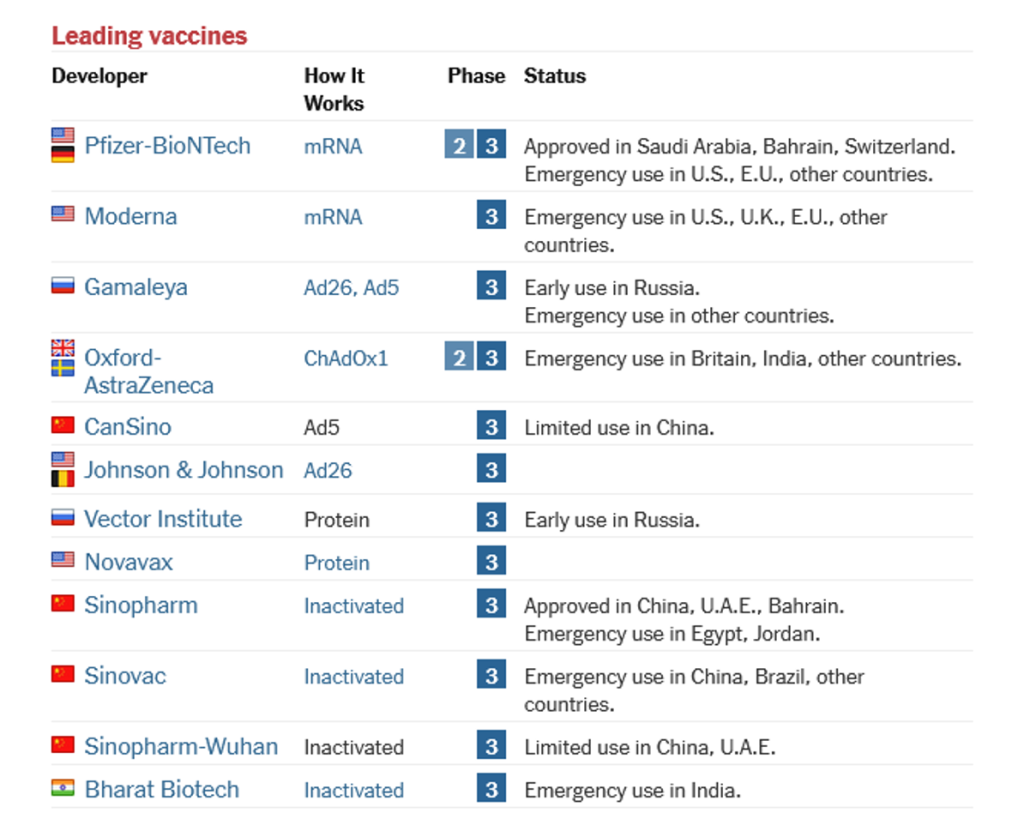
:: COVAX announced the signing of an advance purchase agreement for up to 40 million doses of the Pfizer-BioNTech vaccine; rollout to commence with successful execution of supply agreements

:: Additionally, COVAX announced that, pending WHO emergency use listings, nearly 150 million doses of the AstraZeneca/Oxford candidate are anticipated to be available in Q1 2021, via existing agreements with the Serum Institute of India (SII) and AstraZeneca

:: COVAX is therefore on track to deliver at least 2 billion doses by the end of the year, including at least 1.3 billion doses to 92 lower income economies in the Gavi COVAX AMC

:: Click here for the latest COVAX supply forecast

Geneva/Oslo 22 January 2021 – COVAX, the global initiative to ensure rapid and equitable access to COVID-19 vaccines for all countries, regardless of income level, today announced the signing of an advance purchase agreement with Pfizer for up to 40 million doses of the Pfizer-BioNTech vaccine candidate, which has already received WHO Emergency Use Listing. Rollout will commence with the successful negotiation and execution of supply agreements.

In further support of its mission to expedite early availability of vaccines to lower-income countries and help bring a rapid end to the acute stage of the COVID-19 pandemic, COVAX also confirmed today that it will exercise an option – via an existing agreement with Serum Institute of India (SII) – to receive its first 100 million doses of the AstraZeneca/Oxford University-developed vaccine manufactured by SII.

Of these first 100 million doses, the majority are earmarked for delivery in the first quarter of the year, pending WHO Emergency Use Listing. The WHO review process, which is currently underway, follows approval for restricted use in emergency situations by the Drugs Controller General of India earlier this month, and is a critical aspect of ensuring that any vaccine procured through COVAX is fully quality assured. According to the latest WHO update, a decision on this vaccine candidate is anticipated in the middle of February at the earliest…

Supply update
COVAX now has agreements in place to access just over two billion doses of several promising vaccine candidates. Negotiations continue for further doses to be secured through existing R&D agreements by COVAX co-lead the Coalition for Epidemic Preparedness Innovations (CEPI), through evaluations of new products with promising results and through contributions from donors.

Based on this, COVAX anticipates being able to provide participating economies doses of safe and effective vaccines – enough to protect health care and other frontline workers as well as some high-risk individuals – beginning in Q1 2021. The aim is to protect at least 20% of each participating population by the end of the year – unless a participant has requested a lower percentage of doses. At least 1.3 billion of these doses will be made available to the 92 economies eligible for the Gavi COVAX AMC by the end of 2021…

POLIO – Public Health Emergency of International Concern (PHEIC); WHO/OCHA Emergencies

Emergencies

POLIO
Public Health Emergency of International Concern (PHEIC)

Polio this week as of 20 January 2021
:: The 148th session of the Executive Board (EB) is currently underway with Member States meeting virtually to discuss the most pressing global health issues including COVID-19 and Polio. The EB reports on both polio eradication and on polio transition planning/post-certification are available here under “148 Executive Board”. These reports will help inform the discussions on polio eradication by Member States.

Summary of new WPV and cVDPV viruses this week (AFP cases and ES positives):
:: Pakistan: 10 WPV1 and three cVDPV2 positive environmental samples
:: Afghanistan: 15 cVDPV2 cases and two cVDPV2 positive environmental samples
:: Burkina Faso: one cVDPV2 case
:: Chad: four CVDPV2 cases
:: Guinea: three cVDPV2 cases
:: Sudan: four cVDPV2 cases

::::::
::::::

Editor’s Note:
Continuing with this edition, we include information about the last apparent update evident on the WHO emergency country webpages, recognizing almost universal and significant interims between such updates regardless of the level of the emergency listed.

WHO Grade 3 Emergencies [to 23 Jan 2021]

Democratic Republic of the Congo – No new digest announcements [Last apparent update: 12 Jan 2021]
Mozambique floods – No new digest announcements identified [Last apparent update: 3 November 2020]
Nigeria – No new digest announcements identified [Last apparent update: 29 Jun 2020]
Somalia – No new digest announcements identified [Last apparent update: 17 July 2020]
South Sudan – No new digest announcements identified [Last apparent update: 4 February 2020]
Syrian Arab Republic – No new digest announcements identified [Last apparent update: 24 October 2020]
Yemen – No new digest announcements identified [Last apparent update: 30 June 2020]

::::::

WHO Grade 2 Emergencies [to 23 Jan 2021]
Afghanistan – No new digest announcements identified [Last apparent update: 5 July 2020]
Angola – No new digest announcements identified [Last apparent update: 03 December 2020]
Burkina Faso – No new digest announcements identified [Last apparent update: 17 décembre 2020]
Burundi – No new digest announcements identified [Last apparent update: 04 July 2019]
Cameroon – No new digest announcements identified [Last apparent update: 22 August 2019]
Central African Republic – No new digest announcements identified [Last apparent update: 12 June 2018]
Ethiopia – No new digest announcements identified [Last apparent update: 22 August 2019]
Iran floods 2019 – No new digest announcements identified [Last apparent update: 12 March 2020]
Iraq – No new digest announcements identified [Last apparent update: 16 December 2020]
Libya – No new digest announcements identified [Last apparent update: 7 October 2019]
Malawi Floods – No new digest announcements identified [Last apparent update: 09 October 2019]
Measles in Europe – No new digest announcements identified [Last apparent update: 16-12-2020]
MERS-CoV – No new digest announcements identified [Last apparent update: 8 July 2019]
Mozambique – No new digest announcements identified [Last apparent update: 03 November 2020]
Myanmar No new digest announcements identified [Last apparent update: :: 3 January 2021
Niger – No new digest announcements identified [Last apparent update: 29 December 2020]
occupied Palestinian territory – No new digest announcements identified [Last apparent update: 4 September 2019]
HIV in Pakistan – No new digest announcements identified [Last apparent update: 27 August 2019]
Sao Tome and Principe Necrotizing Cellulitis (2017) – No new digest announcements
Sudan – No new digest announcements identified [Last apparent update: 24 June 2020]
Ukraine – No new digest announcements identified [Last apparent update: 1 May 2019]
Zimbabwe – No new digest announcements identified [Last apparent update: 10 May 2019]

::::::

WHO Grade 1 Emergencies [to 23 Jan 2021]

Chad – No new digest announcements identified [Last apparent update: 30 June 2018]
Djibouti – No new digest announcements identified [Last apparent update: 25 novembre 2020]
Kenya – No new digest announcements identified [Last apparent update: 11 December 2020]
Mali – No new digest announcements identified [Last apparent update: 3 May 2017]
Namibia – viral hepatitis – No new digest announcements identified [Last apparent update: 20 July 2018]
Tanzania – No new digest announcements identified [Last apparent update: 21 October 2020]

::::::
::::::

UN OCHA – L3 Emergencies
The UN and its humanitarian partners are currently responding to three ‘L3’ emergencies. This is the global humanitarian system’s classification for the response to the most severe, large-scale humanitarian crises. 
Syrian Arab Republic – No new digest announcements identified
Yemen – No new digest announcements identified

::::::

UN OCHA – Corporate Emergencies
When the USG/ERC declares a Corporate Emergency Response, all OCHA offices, branches and sections provide their full support to response activities both at HQ and in the field.
COVID-19
:: Coronavirus Disease (COVID-19): Weekly Epidemiological Update (17 January 2021)

East Africa Locust Infestation
:: Desert Locust situation update – 22 January 2021

::::::
::::::